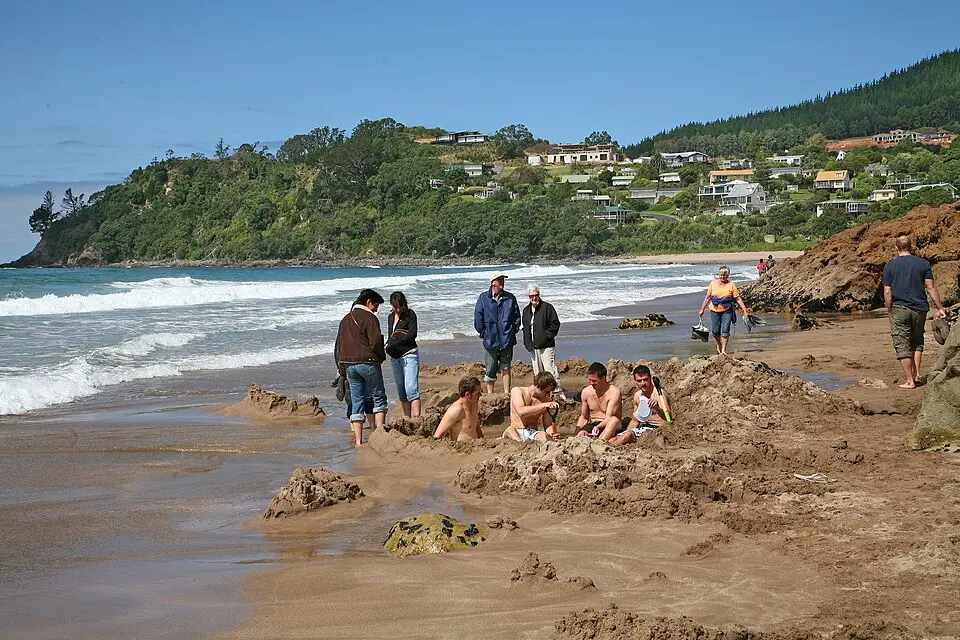
This is a tidal beach, not a permanent spa pool. Geothermal water rises through sand near the rocks at the southern end of Hot Water Beach on the Coromandel Peninsula. Visitors dig a shallow basin and cool the hot water with seawater. The Coromandel regional visitor guide gives an approximate digging window of two hours either side of low tide. The 2009 photograph shows hand-dug pools, not current beach conditions. Check the tide table for your own date: at high tide the hot patch is submerged.
Choose a usable low tide before driving
Plan a daylight low tide first, then arrange travel from Whitianga or Hahei. Follow Hot Water Beach Road to the beach access and walk toward the southern rocks; a pin in the middle of the bay is not the digging area. Bring a spade or check whether local hire is operating. Parking and spade hire may cost extra. Published parking or hire amounts may change, so verify them locally rather than budgeting from an old figure. If surf or weather make the visit unsafe, do not force a hot-pool stop into the itinerary.
Treat hot sand and surf as separate hazards
Spring water can scald. Dig at the edge of the hot area, allow seawater to mix in and test the temperature before sitting down; watch children closely. The local guide warns of a strong rip near the offshore rocks. A shallow sand pool is not permission to swim beside those rocks. Stay out of that surf and follow lifeguard flags and beach signs if a patrol is operating. Patrols are seasonal, not a year-round guarantee. Fill your hole before leaving and take rubbish away. Recheck the tide, weather and on-site safety advice on your day of travel.